> For the complete documentation index, see [llms.txt](https://docs.dapplooker.com/llms.txt). Markdown versions of documentation pages are available by appending `.md` to page URLs; this page is available as [Markdown](https://docs.dapplooker.com/dapplooker-analytics/products/analytics/browse-and-search-data.md).
# Browse and Search data
### By following these steps, you can effectively browse and search the data for your project.
1. To start browsing the data for your project, access the Analyzer section by clicking on it.
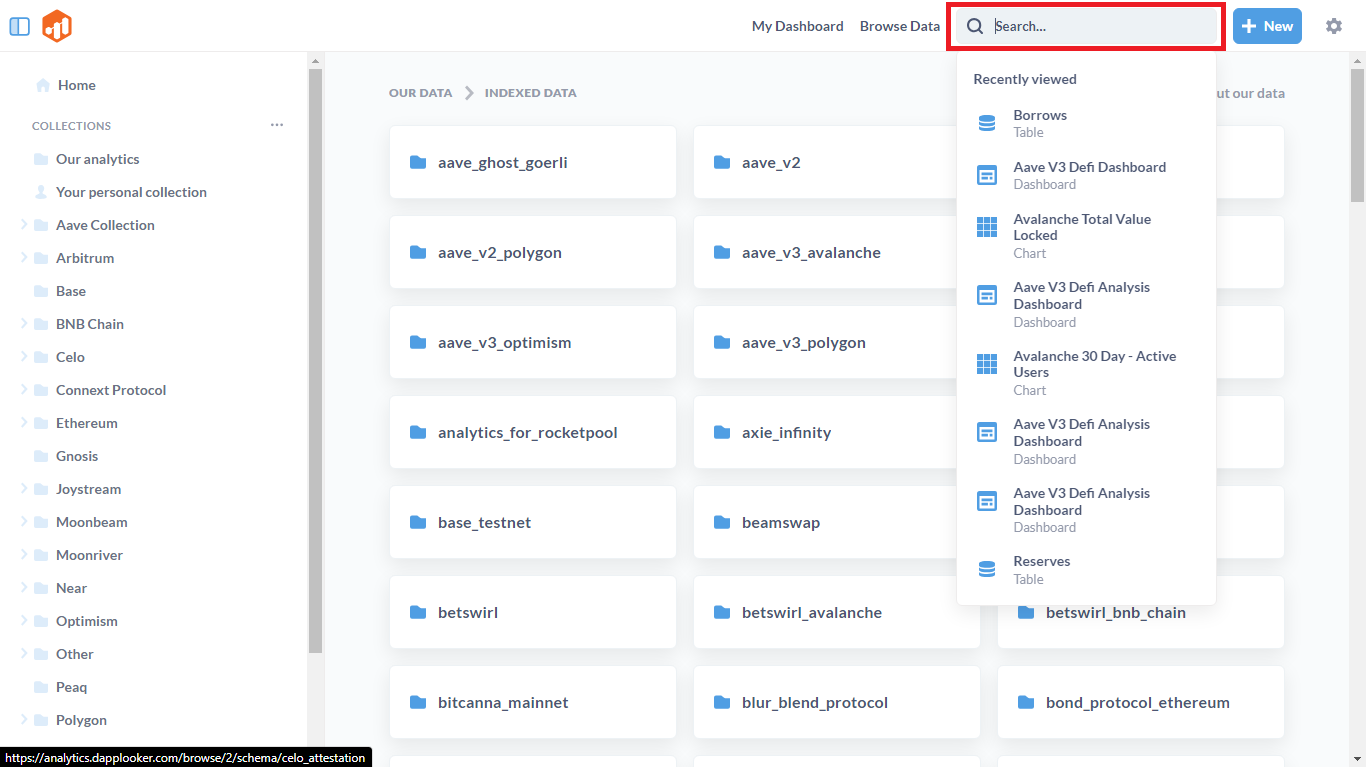
2. locate the "Browse Data" option. This feature allows you to explore the collections of indexed data related to your project.
3. Upon entering the "Browse Data" section, you'll find a comprehensive list of indexed data collections associated with your project.
4. To quickly find specific information within the indexed data, utilize the search functionality provided. Click on the "Search" button.
5. You can search for dashboards, charts, or collections, depending on the type of information you are looking for Eg. I am searching for Aave v3 Ethereum dashboard.